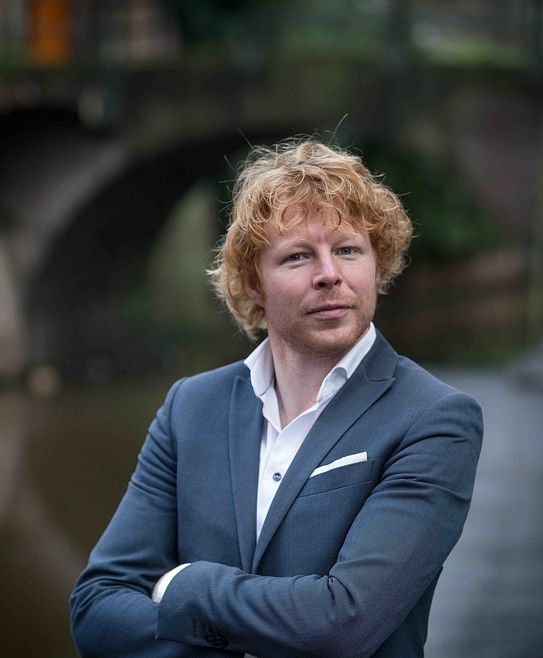
Leadership is a much-discussed topic. Perhaps it is even discussed too much. Ultimately, leadership is about taking action. According to Jort Verhage, leadership is about “inspiring one another to work with integrity”. Leadership is not an isolated topic for management, executives or CEOs. It is something everyone is part of.
Leadership determines the direction of an organization. Which way are we heading together? Alignment, communication, dialogue and unity are needed to move in the same direction. How do you determine the right direction? You certainly do not do it alone. You do it together. And what is needed for this is an organisational culture in which people can work openly, transparently and safely with one another.
Without these basic ingredients, you can sail in any direction, but you will never reach a destination. It is therefore essential that everyone inspires one another to have open conversations, be genuine and work together honestly. This creates the space to develop leadership together, determine the direction and then move forward in the right way.
In this keynote, you will learn how the role of the court jester can contribute to leadership that is supported by everyone within the organization.
Organisations that do not put workplace happiness at the centre will eventually fail. It is that simple. What does every human being want? To live a happy life. And what takes up a large part of our lives? Work. So please, make it enjoyable. Work should simply be fun. Not all the time, but often enough to experience workplace happiness.
“I still see organisations that do not put workplace happiness at the centre and do not go bankrupt.” Without workplace happiness, you miss out on enormous value for both employees and customers. Workplace happiness is deeply rooted in an organization and affects almost everything. First, employee satisfaction, but also customer satisfaction. Put love into your employees and they will put love into your customers.
Workplace happiness creates dedication, passion, creativity and a focus on results. People who are happy at work have energy, inspiration and strength to give and share. This also makes the people around them happier. But if you are constantly negative—or have been made that way—you lose energy and mainly take rather than give.
Turn employees into givers instead of takers. This starts with management, based on the principle that “a fish starts to rot at the head, and an organisation at the top”. Management should lead by giving: putting workplace happiness first, providing inspiration and energy, and positively influencing the entire organisation.
In this keynote, you will learn more about how the role of the court jester can contribute to workplace happiness.
Everyone wants autonomy: the ability to make independent decisions that suit you. In other words, decisions that align with your values and principles. That is how you can be yourself.
Are you truly yourself in the workplace? Do you say “yes” and “no” to the right things? Do you allow others to walk all over you? Do you speak up for what you stand for? Do you have the courage to be the leader of your own work and life?
Ultimately, it is about taking control yourself. You are your own most valuable asset. Stand up for that. Protect it. And let it guide you in a positive way.
How do you follow your own path in an organisation or society where this is not always easy? In this keynote, you will discover how the court jester attitude can help you move forward.
The court jester does not care about standards, rules, conventions or frameworks. The court jester follows their own moral compass and does not allow themselves to be pushed off course. At the same time, the court jester is always open to feedback, criticism and different perspectives.
On the one hand, the court jester can be irritating and confrontational; on the other, they are your most sincere friend. The court jester inspires and demonstrates that everyone can be themselves, stay close to their core values and have a positive impact on their organisation and society.
Without friction, there is no shine. This is and will remain the guiding principle of the court jester.
You have a dream for your organization and its employees. How do you turn that dream into reality? Support, unity, collaboration and responsibility can make it happen. Without these ingredients, it becomes a nightmare.
The engine of your organisation is its people. If an organisation wants to move from A to B, the engine needs to run. And for that, you need energy. You can think about how to create more energy, but even more importantly: stop the energy leaks.
What drains energy within organisations? Sacred cows, political games, abuse of power, toxic leadership, inappropriate behavior, stagnation, mind-numbing work; you name it. Stop it. But how?
Who is willing to stick their head above the parapet and address these energy leaks? After all, if you speak up, will it be appreciated? Or will you be standing outside the door the next day?
The role of the court jester offers a unique approach. The court jester is everyone’s most honest friend. They say what needs to be said, hold up a mirror and help keep the organisational engine running at full speed.
The court jester is untouchable and acts from the most sincere and compassionate intentions, always with courtesy at the centre with care and attention for others.
Is your organisation ready for fresh energy, new insights and a unique approach? Discover how the role of the court jester can help your organisation move forward. You will leave with immediately applicable lessons.
By 2100, humanity will have gone extinct according to one of three scenarios outlined by Steve Luby, director at Stanford’s Center for Innovation in Global Health. He describes how humanity could disappear, civilisation could collapse, or human society could thrive in 2100. Naturally, we want to aim for the third scenario. But how?
In his keynote Humanity in Time, Jort argues what we can do to shorten or extend humanity’s time on Earth. To do so, we need to look at the transactions we make every day.
For example, do you order a cup of coffee every morning? You could potentially be shortening humanity’s time. The coffee beans have to be transported to the Netherlands, roasted using energy and sold in a shop that also consumes energy. If the transport, roasting process and shop are not sustainable, your transaction comes at a cost to humanity.
However, there are also factories, supply chains and organisations that are carbon-neutral or even capture CO₂. Transactions with the first group maintain the status quo, while transactions with the second group can extend humanity’s time and contribute to a more sustainable global society.
It is important to raise awareness of which transactions have a positive impact on humanity’s future. Together with partners across various sectors, Jort Verhage is developing the initiative humanityintime.nl to raise consumer awareness and make supply chains more sustainable worldwide.
Would you like a keynote on sustainability that approaches the subject in a different, highly practical and immediately understandable way? Then Jort Verhage is the right choice. As a court jester, he holds up a mirror—this time focusing on sustainability.
- At the end of the keynote, the book Dominee van de Duurzaamheid, written by Leen Zevenbergen, can be purchased.
- At the end of the keynote, participants can join the humanityintime.nl community.
Do you know them all? We now have four different generations in the workplace, each with their own characteristics. How can you bridge generational gaps? How do you ensure that different generations strengthen rather than hinder one another?
The first step is learning to speak each other’s language. Get to know the different generations and become aware of their differences and similarities. With these insights, opportunities for collaboration and mutual reinforcement become visible.
Jort Verhage speaks both languages. He is twenty years old, but has already been an entrepreneur and sparring partner to entrepreneurs, executives and directors for seven years. As a result, he has grown up with the languages of Generations Y and X and the Baby Boomers. At the same time, he is part of Generation Z and is closely connected to today’s students and school pupils.
Few people are better positioned to bridge the gap between young and old, different generations and people in general. In this keynote, you will learn how to create the same kind of connection within your organization, so that generations strengthen rather than hinder one another.
As a moderator, Jort has his own distinctive approach that people recognise him for. At the same time, this approach is his promise to the client about what they can expect from him. It is rooted in his own DNA, values and principles.
Jort Verhage’s DNA
- Enthusiasm: He brings an abundance of enthusiasm and energy to share with the audience.
- Courtesy: He takes a humble approach and aims to guide the event with as much care, attention and respect as possible for the audience, organisation and fellow speakers.
- Inspiration: He always brings inspiration, whether closely connected to the topic of the day or slightly beyond it. Jort aims to send everyone home inspired, making the event memorable.
- Directness: Jort always says what he thinks. He is honest, does not play games and is not guided by vested interests. As a speaker and moderator, he aims to share the real story as much as possible within his reach.
- Engagement: He actively engages with the organisation during the preparation, ensuring that he fully understands the event, its expectations, ambitions and objectives. He then uses this knowledge to contribute to the event as effectively as possible.