The psychological workings of trust are becoming increasingly relevant in the new approach to branding. Gain results-oriented brand knowledge from a strategic and sustainable perspective. Discover the four principles of sustainable (brand) leadership, illustrated with relevant examples, tips, tools, and ideas. Effective brand management can contribute to a more positive brand image, stronger brand relationships (brand loyalty), and greater brand equity through relevant and meaningful brand experiences.
Trust—in each other and in the future—is essential for change, connection, empathy, and leadership. But how do you build it? What ancient evolutionary mechanisms underpin trust, and how can you positively influence or predict behavioral change? And how can this improve your brand communication in today’s connected age—the digital era in which everything and everyone is interconnected?
What characteristics do we rely on when deciding whether to trust one another? There is one aspect that connects us and will therefore remain important for people, organizations, and society in the future: trust.
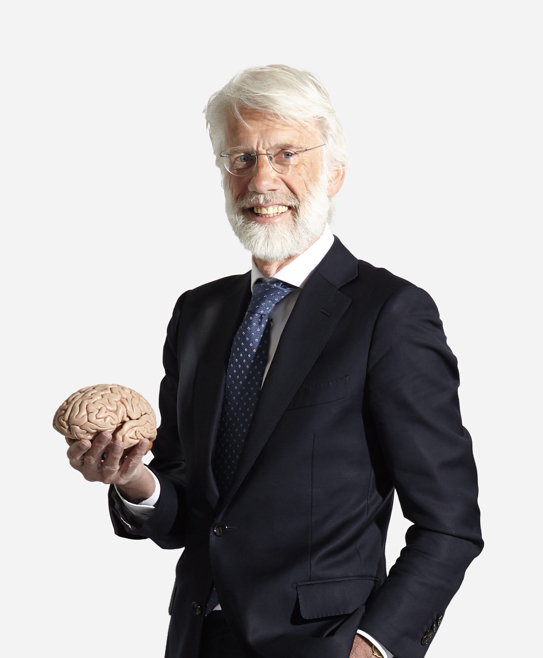
In his talks on the brain, behavior, leadership, trust, and happiness, Erik shows how to build and apply trust from a sustainable, social, and results-oriented perspective. What makes his dynamic and visually engaging talks distinctive is the rich range of topics he explores, including our fascinating brain, sustainable leadership, behaviour, trust, and happiness.
He has a talent for translating complex subjects into accessible insights using infectious humour and memorable examples, making him an engaging, original, and versatile speaker. Drawing on his experience, he not only informs audiences about their own awareness, brand behavior, and emotions, but also inspires them to put these insights into practice. His talks are often described by audiences as true eye-openers.
Learn more about the brain, emotions, happiness, and behavior. How does our decision-making work, and how do we experience brands? Discover how unconscious behavior becomes stronger when it aligns with what we already trust.
The psychological workings of trust are therefore becoming increasingly relevant in modern brand thinking. Because we often make choices emotionally and automatically before processing them rationally and reflectively, creating emotional value is becoming increasingly important.
Where we once only created new connections within our own brains, we are now also creating connections between our brains and the neural networks of computer systems. Through these new connections between the brain and AI technology, our brains are increasingly becoming ‘bionic brains’.
Many smartphone users now spend as much as a third of their waking hours online and connected. At the same time, neuroface technology is entering our bodies, with existing implants that connect directly to the brain. Through this immersive augmented reality, the boundary between the physical and virtual worlds is gradually disappearing.
But are we still in control of our own minds? The first ‘neural hack attack for mind control’ may not be far away.
Through numerous examples, Erik takes you into the world of adolescents, exploring how the adolescent brain works and how this organ has evolved over millions of years into what it is today.
In his talks, he uses humorous examples to show what it is like when adults respond to certain situations like adolescents again—and how liberating that can sometimes be. Traits that do not necessarily disappear as we grow older—we remain homo ludens, the playful human—are often pushed into the background by culturally determined social norms.
We often say, ‘Behave yourself, you’re not a child anymore!’ Yet this can also make us lose sight of the sometimes surprisingly rational motivations behind adolescents’ behavior. From their own perspective, adolescents are therefore more often right than you might like to admit.
As a renowned expert in trust, Erik’s main mission is to promote future-oriented, sustainable brand thinking and leadership, motivating people and organizations to change their behavior and adopt a more positive outlook on the future.
Trust—in each other and in the future—is essential for change, connection, empathy, and leadership. But how does trust work in the brain, and how do you build it in yourself and others? What ancient evolutionary mechanisms underpin trust, and how can they be used to positively influence or predict behavioral change?
And how can this knowledge improve brand communication in today’s connected age—the digital era in which everything and everyone is interconnected?
Trust and privacy between people, such as in team collaboration, as well as between people and computers, robotics, and artificial intelligence (AI), are becoming increasingly important.